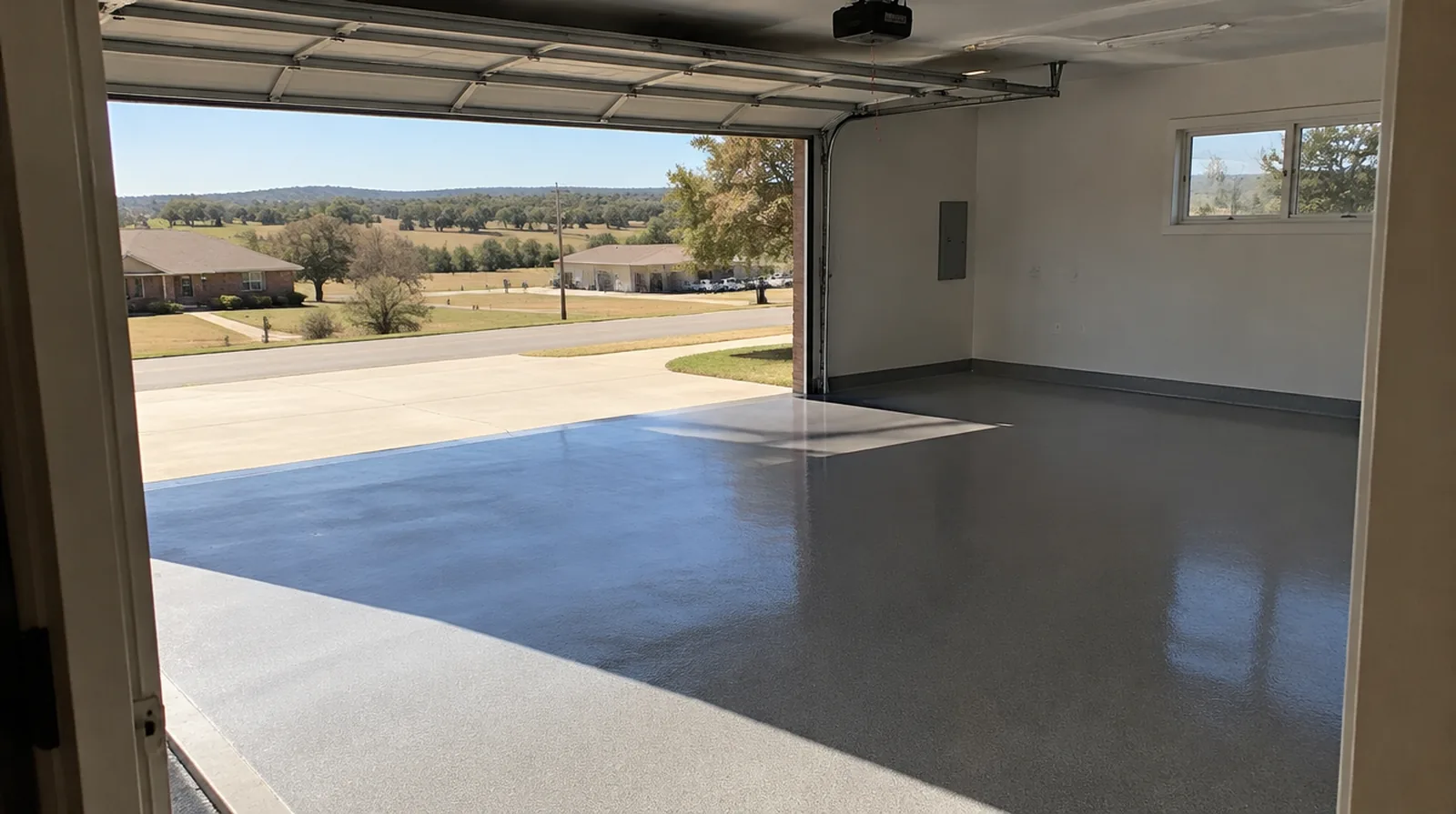
Why bare concrete stains here
Red clay and oil soak into raw concrete and are very hard to remove. Once sealed, the floor resists them, and they rinse off.
How we build it
1. Diamond grinding with vacuum collection
2. Crack, chip and joint repair
3. Penetrating primer
4. Color body coat, with flake for texture
5. Clear top coat
For heavy use
If you park a loaded truck or a tractor, we recommend a thicker body coat for durability. Extra thickness only pays off on a slab that was ground and repaired first, and a good primer on garage floor prep from another installer who builds floors for work trucks explains why.
Heat and humidity
Long, humid summers can slow cure times. We plan around the weather.
Time
Most garages take two days. Polyaspartic can shorten that.
Storm shelters in the garage
In-garage shelters are common in this part of Oklahoma. We grind and coat right up to the shelter hatch or base and leave the lid and seal untouched so it still opens and closes the way it should.
Trucks, trailers and gravel roads
Many Sallisaw garages see a lot of gravel and red mud from county roads. A thicker body coat and a tough clear top stand up to the grit and to trailer tongue jacks. A steel plate or a block under the jack spreads the weight.
Keeping it clean
Hose out the mud, sweep up gravel before it gets ground in, and wipe up fuel or oil when you see it. A coated floor makes all of that quick work.
Questions Sallisaw homeowners actually ask
Will gravel stuck in my tires scratch the floor? Small rocks can scratch any clear coat. A mat at the door and a flake finish make those marks hard to see.
Can you coat a garage that floods a little in heavy rain? Yes, though we suggest fixing the drainage. The coating itself sheds water fine.
Do you need my power? Yes, a standard outlet for vacuums. Grinders may need a dryer-style outlet or our generator.
Garage floor epoxy in Sallisaw is ground in, primed, built with color or flake and topped with a clear coat that resists hot tires and red clay. Most jobs take one to two days.
How the two install days go
Day one we tape off walls, grind with vacuum-equipped machines, fill cracks and lay the primer and body coat. Day two we scrape and vacuum loose flake and roll the clear top. On muggy days we check dew point first so the finish cures clear. Before we leave you get written times for walking, moving things back and parking, plus a short care sheet. Cabinets and wall racks are best installed after the floor cures.
Priming early in the morning
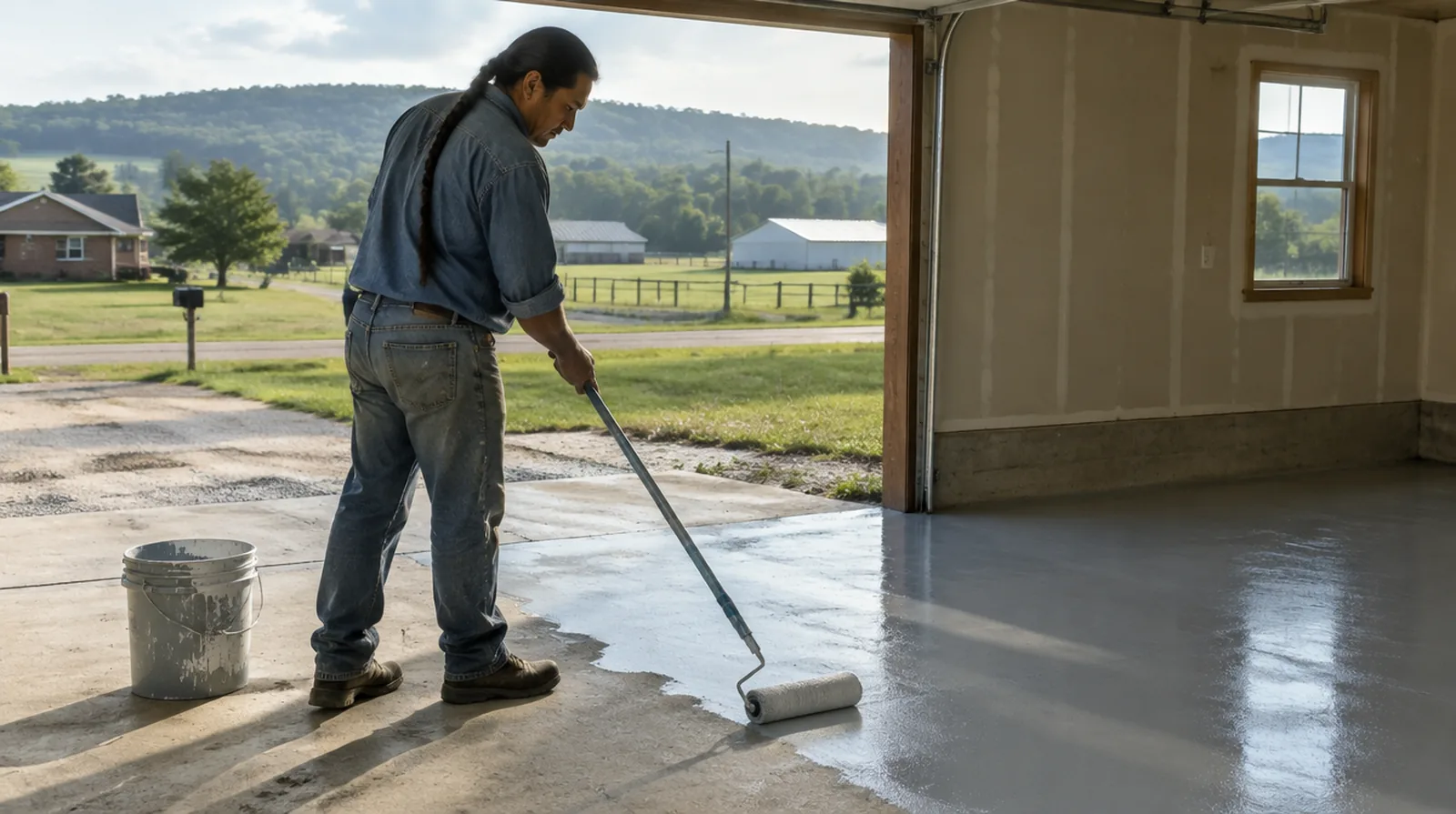
In Sallisaw, we often start priming as soon as the grinding dust is cleaned up in the early morning, before the day gets hot. The photo shows an installer rolling primer onto a freshly ground slab in a brick home's attached garage while the light outside is still soft. Cooler concrete gives us more working time, and starting early lets the primer set before the afternoon heat and humidity peak.
Primer is the layer most people never see, but it does a lot of the work. It soaks into the ground concrete, seals off pores that could push up air bubbles, and gives the color coat something to lock onto.
What helps your garage job go smoothly
- Empty the garage the night before.
- Park outside the driveway so we can bring equipment close.
- Turn off sprinklers aimed near the garage door.
- Keep pets inside or away from the work area.
Garage floor answers for Sallisaw
Why not start in the afternoon?
Hot slabs speed up curing too much and can trap air. Mornings give a better result in summer.
Is primer always needed?
For most garages, yes. It improves bonding and helps with moisture and outgassing.
We will also tell you when you can start moving things back in, so you can plan your evening around it.
Get a garage quote
Call (918) 208-0235.