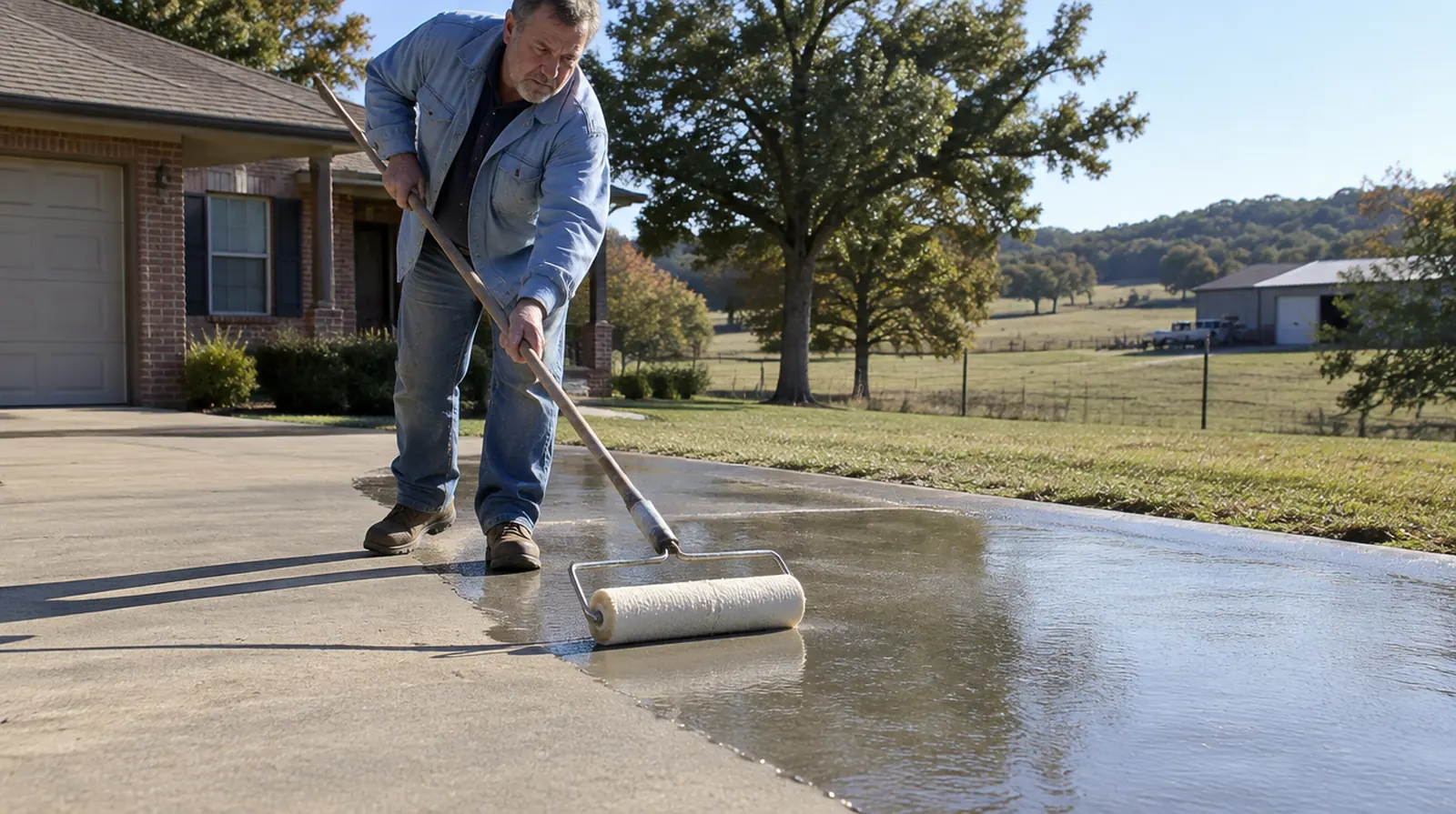
For indoor floors, see epoxy.
What sealing protects
Driveways, shop aprons, sidewalks and patios take rain, oil and red clay. A sealer slows them from soaking in and helps prevent freeze damage.
Choosing a sealer
Penetrating sealers keep a natural look. Topical sealers add sheen.
Rural driveways and pads
Concrete pads in front of shops and barns see heavy equipment. We clean and degrease before sealing so the product bonds.
How often
Every few years for most surfaces.
Red clay and sealers
Red clay stains are a big reason people seal their driveways here. A sealer will not make concrete stain-proof, but it slows absorption long enough to wash the clay off before it sets.
Sealing around metal buildings
The apron outside a shop door takes water off the roof, mud from tires and equipment fluids. We seal those pads with a product that handles traffic and resists oil.
Shelter pads and steps
Above-ground storm shelters often sit on a concrete pad, and steps lead down to in-ground shelters. Sealing those surfaces helps them shed water and resist cracking from freezing.
Gravel roads, red clay and lake spray
Long gravel drives throw fine grit and red clay onto aprons and walkways, spring storms soak the ground, and a few hard freezes each winter test any concrete that has absorbed water. Concrete sealing in Sallisaw keeps that water and clay near the surface so it rinses off instead of staining and scaling the slab. Lake cabins near Kerr Lake add boat ramps and pads that sit wet much of the summer.
Things people ask before we seal
Can sealer go on the slab under my storm shelter door? Yes. We seal around the hatch and keep the hinge area clean so it still opens freely.
Does a sealed apron hold up to a loaded hay trailer? The sealer protects the surface; the slab's thickness carries the load. We will tell you if we see signs it is under-built.
My concrete has a powdery white crust. Seal over it? No. That is efflorescence. We scrub it off and let the slab dry first.
Can I park on it the same day? Usually the next day, after the sealer has set.
How we prepare
Pressure wash, degrease, scrub off clay and mineral crust, then wait for the slab to dry fully during a stretch of dry weather in spring or fall.
Choosing a product
Penetrating sealers breathe and keep the natural look, which suits exposed drives and lake pads. Acrylics add sheen on covered porches but need recoating sooner.
How long a seal lasts
Penetrating sealers on exposed drives usually last several years. Covered porches hold sealer longer than slabs in full sun.
Sealing a barn apron
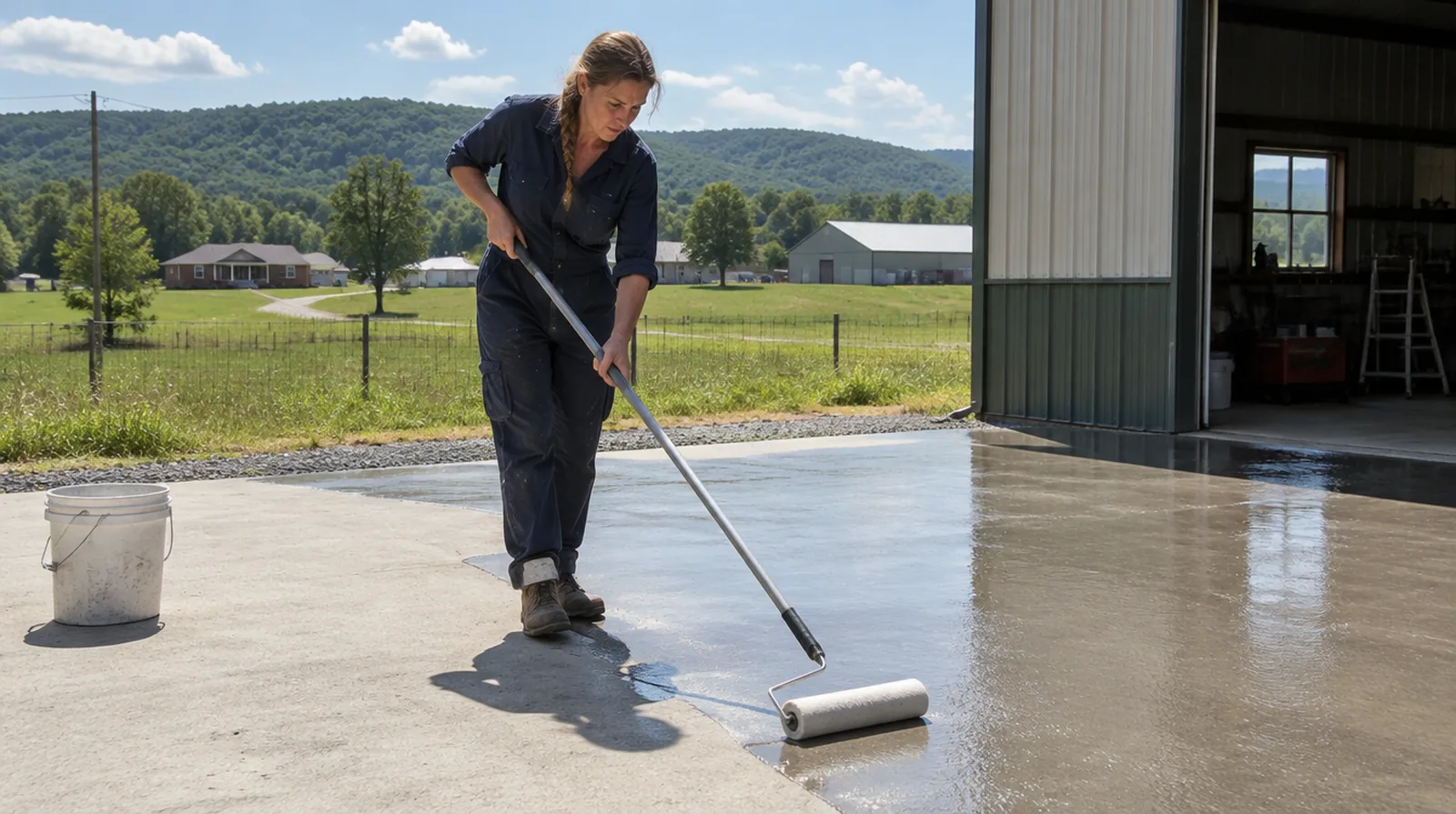
The concrete apron outside a barn or shop door takes tractor tires, cattle trailer traffic and constant weather. A penetrating sealer helps that apron resist water and freeze damage. The photo shows a worker rolling sealer on an apron outside a metal barn with pasture and wooded hills behind.
We clean off mud, manure and oil first so the sealer can soak in evenly.
Apron sealing steps
- Wash and scrub the surface.
- Let it dry.
- Roll or spray the sealer.
- Keep equipment off until it sets.
Barn sealing questions
Does it stop cracking?
No, but it slows surface damage from water and freezing.
How often should it be redone?
Every few years, depending on traffic.
What sealing protects against on Sallisaw farms
Barn aprons see more than just weather. Manure, fertilizer and feed spills can eat at bare concrete over time, and wet hay left in place stains the surface. A sealer slows those down and makes it easier to wash the apron clean. It also helps reduce the scaling that happens when water freezes in the surface during cold snaps. We can seal the apron, the barn alley and any concrete walkways at the same time. If the apron is cracked or crumbling, we will tell you honestly whether it is worth sealing or if it should be repaired first.
Get a sealing quote
Call (918) 208-0235.